2026 Top Types of Custom Printed Boxes for Global Buyers

In 2026, custom printed boxes are becoming practical brand tools, not merely attractive shipping containers. Global buyers now compare structure, protection, print quality, sustainability, and total landed cost. A beautiful box can still fail during a humid sea journey.

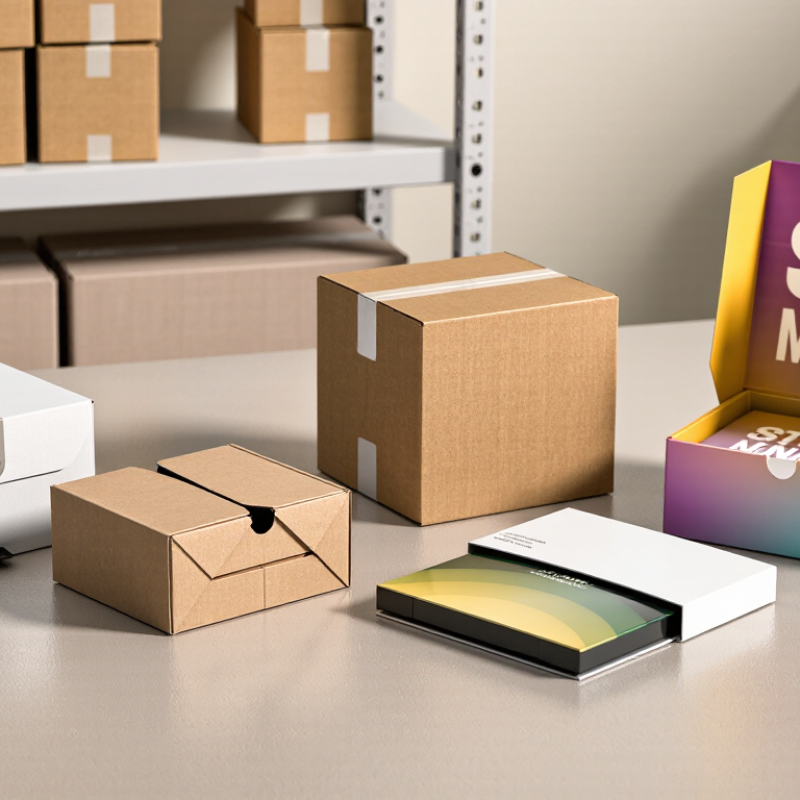
This guide examines leading box types, including mailer boxes, folding cartons, rigid boxes, corrugated shipping boxes, sleeves, and display packaging. Each format serves a different purpose. Mailers suit subscription products and direct-to-consumer orders. Folding cartons support efficient retail display. Rigid boxes create a heavier, premium experience. Corrugated designs protect larger products through warehouses and international transport.

Details matter. A packaging engineer may check board strength, flute selection, edge crush performance, and closure security. A print specialist may test color consistency across multiple production batches. Buyers should also confirm food-contact suitability, recycling claims, labeling rules, and responsible forestry certifications where relevant. Requirements differ between markets. Local compliance review remains essential.

No single format wins every market. That assumption fails.

The right choice depends on product weight, handling risks, shelf conditions, customer expectations, and budget. Samples should be tested before mass production, especially when boxes face rain, stacking pressure, or temperature changes. This article offers a practical comparison based on common packaging applications and supplier evaluation experience. It also recognizes an uncomfortable truth: sustainable packaging claims can sound convincing without proving real performance. Careful specifications, documented testing, and transparent communication help global buyers make more reliable decisions in 2026.
2026 Top Types of Custom Printed Boxes for Global Buyers

Global Custom Printed Boxes: Market Scope and Buyer Specifications for 2026

2026 Top Types of Custom Printed Boxes for Global Buyers

Global Custom Printed Boxes: Market Scope and Buyer Specifications for 2026

Global buyers are moving beyond attractive graphics. They want packaging that protects products, supports efficient shipping, and reflects regional sustainability expectations. Smithers’ global packaging research projects the market to exceed 1.3 trillion US dollars by 2028, increasing pressure on suppliers to offer scalable and measurable solutions.

Corrugated mailer boxes suit direct-to-consumer shipments and subscription products. Folding cartons remain practical for retail shelves, while rigid setup boxes serve premium presentation. Kraft shipping boxes often appeal to buyers seeking a natural appearance. Each type needs different specifications, including board grade, box dimensions, print colors, surface coating, and compression strength.

Small details matter. A two-millimeter size change can affect pallet efficiency. Buyers should request dielines, physical samples, and test results before approving production. Moisture resistance is important for humid routes, but heavy coatings can weaken recycling performance. That trade-off is often underestimated.

The 2024 Packaging Machinery Manufacturers Institute research also identifies sustainability and automation as major packaging investment themes. For 2026 sourcing, buyers should confirm recycled content, ink suitability, recycling guidance, and production tolerances. They should also check whether the supplier can maintain color consistency across batches. Perfect consistency is difficult. Clear approval standards make disagreements less likely.
Corrugated Shipping Boxes: Smithers’ $205.2 Billion Market Benchmark

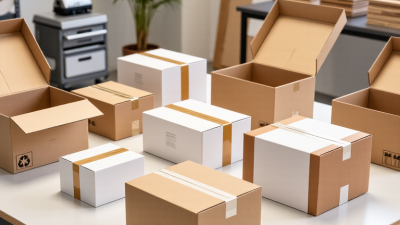
In 2026, corrugated shipping boxes remain a practical choice for global buyers seeking custom printed packaging. A widely cited industry benchmark values the market at $205.2 billion. This figure signals strong demand, but it does not guarantee growth for every supplier. Box performance still depends on design, transport routes, and product weight.

A reliable carton starts with the right board grade. Single-wall boxes suit lighter goods and shorter journeys. Double-wall construction offers better stacking strength for heavier shipments. Test samples before placing large orders. Check compression resistance, edge crush strength, print clarity, and moisture response. A box may look excellent on a screen, yet fail after repeated handling.

Custom printing can support identification, handling instructions, and a consistent unboxing experience. Keep critical text readable at small sizes. Use water-based inks when suitable for the packaging process. Confirm dimensions against real products, including protective padding. Small errors can increase shipping volume and costs. I have found that buyers often focus on artwork first, then discover structural problems later. That order deserves reconsideration.

The $205.2 billion benchmark offers useful market context, not a substitute for supplier verification. Request material specifications, production samples, and quality records. Ask how cartons are packed for export and stored before shipment. Climate changes can affect board moisture and box strength. A dependable purchase decision combines market awareness with physical testing and honest review.

Folding Cartons: Print Quality, Product Fit, and Retail Shelf Performance

Folding cartons remain a practical choice for global retail packaging. The 2024 Smithers report, The Future of Folding Cartons to 2028, forecasts roughly 4% annual market growth through 2028. That growth reflects demand for compact, printable, and recyclable paperboard formats. Print quality matters at first contact. Sharp text, clean gradients, and accurate color help shoppers read details quickly. However, excessive gloss can create glare under strong store lighting.

Product fit is equally important. A carton should hold the item firmly without crushing corners or wasting internal space. In production reviews, small fit errors often create larger shipping problems. Loose products may rattle, while tight folds can damage sensitive surfaces. Prototype testing should measure compression, opening force, and tray stability. A 2023 global packaging survey reported that more than half of consumers consider packaging sustainability when choosing products. Yet, the survey also indicates that convenience and product protection remain decisive. Sustainability alone cannot repair poor engineering.

Shelf performance depends on structure and visibility. The Packaging Machinery Manufacturers Institute’s 2024 industry research identifies flexible, efficient packaging operations as a continuing investment priority. Folding cartons support this need through flat shipping and efficient storage. Strong contrast helps a package stand out across a crowded shelf. Panel hierarchy should guide the eye from product name to key information. A minor registration shift may pass unnoticed on screen, but it can look careless in print. That is worth checking twice. Good cartons are not merely attractive; they fit, open, stack, and communicate reliably.

Rigid Setup Boxes: Premium Unboxing Demand and Brand Protection

Rigid Setup Boxes: Premium Unboxing Demand and Brand Protection

Rigid setup boxes are becoming a strong choice for global buyers seeking premium presentation. Their thick paperboard walls create a firm, substantial feel in the hands. That first touch shapes customer expectations before the product appears. Carefully fitted inserts can prevent movement during storage and delivery. This matters for delicate items. It also reduces avoidable surface damage.

A quality rigid box usually combines dense board, accurate wrapping, and controlled folding lines. Buyers should request samples before approving large production runs. Check corner alignment, lid tension, insert fit, and print consistency. Small defects become obvious under bright retail lighting. Packaging teams should also review carton strength and moisture exposure during transport. A beautiful box can still fail if its structure is weak. This point is sometimes underestimated.

Premium unboxing depends on more than appearance. Soft-touch coatings, foil details, magnetic closures, and layered inserts can create a memorable opening sequence. However, extra features increase cost and material use. Not every product needs them. In my assessment, the best designs balance ceremony with practical protection. Recyclable paper components may support responsible purchasing, but material claims require supplier documentation. Testing remains essential, especially across different climates and shipping routes. Even experienced buyers can overlook this step. A restrained, well-engineered box often performs better than an overdecorated one.

2026 Top Types of Custom Printed Boxes for Global Buyers

Rigid Setup Boxes: Premium Unboxing Demand and Brand Protection

The chart compares the estimated paperboard surface required for four common rigid setup box structures designed around the same 200 × 150 × 60 mm internal product space. Higher material area generally supports stronger walls, more protective wrapping, and a more substantial premium unboxing experience.

Values are engineering benchmarks calculated from the stated internal dimensions and typical structural layouts. They are not company market-share figures or sales data.

Sustainable Box Materials: McKinsey’s 60–70% Consumer Preference Benchmark

In 2026, global buyers are choosing custom printed boxes that reduce waste without sacrificing presentation. A widely cited consumer study places sustainable packaging preference near 60–70% across several markets. This benchmark is not universal, but it signals a strong purchasing direction.

Recycled paperboard, kraft corrugated board, and molded fiber are practical choices for retail and ecommerce packaging. A 2024 international packaging survey reported that material recyclability ranked among buyers’ leading sustainability criteria. Kraft mailer boxes suit lightweight products. Corrugated boxes protect heavier goods during shipping. Rigid recycled-board boxes create a premium feel, but they often use more material.

Small details matter. Use water-based inks, right-sized structures, and simple paper inserts. A box that fits closely can reduce empty space and transport emissions. Yet “eco-friendly” claims require evidence. Recycled content, coating type, and local recycling access should be clearly checked. Some compostable materials fail in ordinary household systems. That part is often overlooked.

Buyers should request material certificates, product samples, and packaging test results before placing large orders. Sustainability is measurable. It is not merely a green color. Cost, durability, print quality, and disposal conditions still need honest comparison. Perfect choices rarely exist. Better decisions usually come from transparent trade-offs.

2026 Top Types of Custom Printed Boxes for Global Buyers - Sustainable Box Materials: McKinsey’s 60–70% Consumer Preference Benchmark

Material, performance, sustainability, printing, and application comparison for international packaging procurement.

Custom Box Type Primary Material Typical Recycled Content End-of-Life Profile Printing Compatibility Common Global Applications Key Procurement Considerations
Corrugated Shipping Box Single-wall or double-wall corrugated fiberboard Recycled fiber is commonly used; the exact percentage depends on liner and flute specifications. Widely recyclable
Keep dry and remove non-paper components where required.
Flexographic, digital, lithographic-laminated, and screen printing E-commerce shipments, electronics, household goods, subscription kits, and export cartons Choose flute profile according to stacking strength, transport distance, product weight, and humidity exposure.
Folding Carton Solid bleached board, coated recycled board, or uncoated paperboard Available in virgin, recycled, and mixed-fiber grades. Generally recyclable
Foil, plastic laminates, and heavy coatings may affect local acceptance.
Offset, flexographic, digital, gravure, embossing, and foil stamping Cosmetics, food products, pharmaceuticals, personal care, and small consumer goods Specify food-contact compliance, caliper, coating type, creasing quality, and barrier requirements.
Rigid Setup Box Paper-wrapped chipboard or rigid paperboard Often incorporates recycled board, while the outer wrap may use virgin or recycled paper. Recyclability varies
Magnets, foam inserts, ribbons, and mixed-material wraps should be separated.
Offset lithography, digital print, foil stamping, embossing, and debossing Premium gifting, jewelry, beauty products, luxury accessories, and presentation sets Higher material and freight weight than folding cartons; evaluate flat-pack or collapsible construction.
Kraft Mailer Box Unbleached kraft paperboard or kraft corrugated fiberboard Recycled kraft grades are widely available; virgin kraft may be selected for higher strength. Widely recyclable
Water-based inks and paper-based labels support fiber recovery.
Flexographic, digital, offset-laminated, and one- to four-color printing Direct-to-consumer products, apparel, books, stationery, and lightweight accessories Natural kraft color affects ink appearance; confirm color targets with a physical proof.
Molded Fiber Box Molded pulp made from recovered paper fibers or agricultural fiber blends Usually made primarily from recycled or renewable fiber, depending on the formulation. Fiber-recoverable in suitable systems
Adhesives, coatings, and attached components may change local recyclability.
Limited direct printing; commonly paired with paper sleeves, labels, or printed inserts Protective inserts, electronics accessories, food-service packaging, and specialty gift packaging Excellent cushioning potential, but surface smoothness, moisture resistance, tooling cost, and dimensional tolerance require testing.
Recycled Paperboard Folding Box Recycled paperboard, commonly grayboard or coated recycled board High recycled-fiber content is available, subject to grade and performance requirements. Generally recyclable
Verify acceptance when plastic coatings, windows, or metallic effects are added.
Offset, flexographic, digital, aqueous coating, and spot varnish Household products, toys, dry goods, stationery, and secondary packaging Good material-efficiency option; check odor, stiffness, surface whiteness, and food-contact suitability.
Paper Tube or Cylindrical Box Spiral-wound paperboard with paper, metal, or plastic closures Recycled content varies by wall construction and surface wrap. Conditionally recyclable
Separate caps, liners, and non-paper barriers when required.
Offset-wrapped, flexographic, digital, and label-based printing Tea, coffee, confectionery, cosmetics, candles, and promotional products Confirm inner barrier performance, closure fit, moisture resistance, and cylindrical print registration.
Consumer Sustainability Benchmark Cross-material purchasing signal Not a material specification Market indicator Design should communicate material and disposal information clearly. Relevant across retail, e-commerce, food, personal care, and consumer goods packaging McKinsey-reported research is commonly cited as indicating that approximately 60–70% of consumers consider sustainable packaging attributes important; results vary by country, survey wording, category, and year.
Data note: Recycled-content levels, recyclability, food-contact eligibility, and accepted disposal routes vary by board grade, coatings, adhesives, local collection infrastructure, and applicable regulations. Buyers should request supplier declarations, technical specifications, and transit or packaging-performance test results before final approval.

Magento Catalog Menu Widget by EMThemes Magento Themes & Magento Templates