

- About Us
- Privacy Policy
- Shipping and Returns
- Terms and Conditions
- Custom Quotation
- Sample Pack
- Contact Us
- Blogs
© 2025 Copyright. All rights reserved.

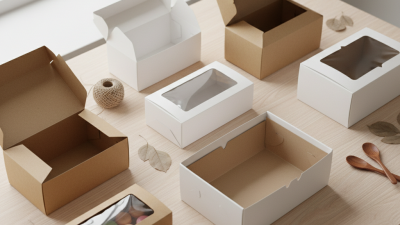
Choosing bakery packaging boxes is a practical decision, not just a branding exercise. The right box protects delicate frosting, supports easy transport, and helps customers arrive home with the pastry intact. The wrong one can crush a croissant, trap steam around warm bread, or make a neat slice of cake difficult to carry. Small details matter.
This guide offers seven tips for comparing materials, dimensions, closure styles, printing, and supplier consistency. A useful standard is simple: match the box to the product, the journey, and the way customers handle it. An illustrative composite specialist, bakery packaging adviser Elena Brooks, puts it this way: “A good box protects the bake without getting in the way of enjoying it.” This is proposed editorial wording, not a verified quotation from a real individual.
Start with the food itself. A tall cupcake needs clearance above its frosting; a loaf may need a snug base and room for a paper liner. Consider moisture, grease, stacking, and whether products leave the shop warm. Then assess the customer experience: Can the box be carried securely? Does it open without bending the pastry? Is the label easy to read? There is no universal best choice. A sturdy cake box may be excessive for cookies, while a lightweight carton may disappoint with a heavy pie. These tips help you ask better questions, test samples with actual products, and choose bakery packaging boxes that fit daily bakery work. A little testing now can prevent avoidable damage later.
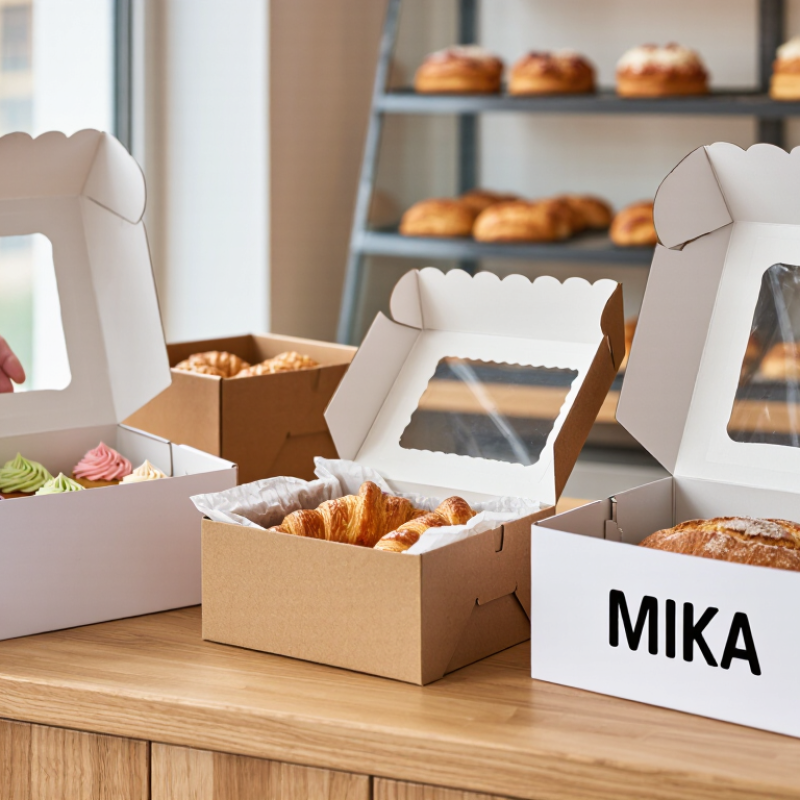
Measure the bakery item in the form customers will receive it. Include frosting, decorations, liners, and any board beneath it. Record length, width, and height, then compare these figures with the box’s usable inside dimensions—not its outside measurements. Leave enough room to prevent smearing, but avoid excess space that lets pastries slide. A quick test-fit helps. A paper mock-up can catch obvious sizing problems, though it will not show how a real box handles moisture.
Weight matters as much as size. A light cookie may suit a simple folding carton, while a dense loaf or decorated cake needs a firmer base and dependable closure. Consider how the box will be carried, stacked, and displayed. If items need separation, an insert can reduce shifting; a window can help customers see the product, but it should not weaken the structure. Check the assembled box with the actual baked goods inside. Then lift and gently tilt it. Small tests reveal a lot.
Choose the style around the product, not just appearance. Cupcakes may need a tall box and a secure insert; flat pastries often fit a shallow tray with a lid. It is easy to guess wrong from a sample. I’d recheck measurements after changing a recipe or decoration, because even a little extra height can affect the fit.
| Bakery Product | Example Product Dimensions | Typical Product Weight | Suggested Box Style | What to Check Before Buying |
|---|---|---|---|---|
| Single frosted cupcake | About 3.5 × 3.5 × 4 in (9 × 9 × 10 cm) | About 2–4 oz (55–115 g) | Single-cupcake box with a fitted insert | Measure the cupcake across its widest frosting point and include the full frosting height. The insert should hold the base securely without touching the decoration. |
| Six standard cupcakes | Arrange in 2 rows of 3; allow roughly 10 × 7 × 4 in (25 × 18 × 10 cm) internally | About 12–24 oz (340–680 g) total | Window or non-window box with a six-cup insert | Check that the insert matches the cupcake base diameter and keeps each cupcake upright during handling. |
| 9-inch round celebration cake | Cake: about 9 in (23 cm) diameter; box: approximately 11 × 11 × 6 in (28 × 28 × 15 cm) internally | About 2–5 lb (0.9–2.3 kg) | Square cake box with a sturdy base | Allow room around the cake for frosting and decorations, plus enough height for toppers. Confirm the base supports the cake without bowing. |
| 12-inch round cake | Cake: about 12 in (30 cm) diameter; box: approximately 14 × 14 × 6 in (36 × 36 × 15 cm) internally | About 4–9 lb (1.8–4.1 kg) | Large square cake box with a reinforced base | Check the assembled box’s base support and the closure style. Measure any piped borders or side decorations before choosing internal dimensions. |
| Standard loaf of bread | About 9 × 4.5 × 4 in (23 × 11 × 10 cm) | About 1–2 lb (450–900 g) | Rectangular loaf box or food-safe bag with a carton sleeve | Measure the loaf after baking and cooling, since its final shape can vary. Choose a box that does not compress the crust. |
| One dozen cookies | For cookies about 2.5–3 in (6–8 cm) across: approximately 9 × 7 × 2 in (23 × 18 × 5 cm) internally | About 12–24 oz (340–680 g), depending on recipe and size | Low-profile bakery box with a flat base | Check the stack height and allow space for parchment or a divider. Use a deeper box for decorated or fragile cookies. |
| 9-inch pie | Pie: about 9 in (23 cm) diameter; box: approximately 11 × 11 × 3 in (28 × 28 × 8 cm) internally | About 2–4 lb (0.9–1.8 kg) | Pie box with a broad, stable base | Measure the crimped crust and any topping above the rim. Ensure the box is tall enough to avoid contact with the filling or decoration. |
Measurement note: Dimensions and weights are practical examples, not fixed standards. Measure the finished product at its widest, longest, and tallest points, then compare those measurements with the box’s internal dimensions. Check the packaging supplier’s load guidance for heavier products.
© 2025 Copyright. All rights reserved.
Magento Catalog Menu Widget by EMThemes Magento Themes & Magento Templates