- About Us
- Privacy Policy
- Shipping and Returns
- Terms and Conditions
- Custom Quotation
- Sample Pack
- Contact Us
- Blogs
© 2025 Copyright. All rights reserved.

Choosing the right packaging printing supplier can shape your product’s appearance, protection, and market credibility. A carton may look simple, yet its paperboard, ink coverage, coating, and folding accuracy all affect customer experience. The right partner understands these details and connects them to your budget, production volume, and brand standards.
Reliable evaluation begins with evidence, not attractive promises. Ask for physical samples with similar materials, finishes, and printing methods. Examine sharp text, color consistency, edge quality, and resistance to scuffing. Request a clear proofing process before mass production begins. A professional supplier should explain minimum order quantities, lead times, tooling costs, quality inspections, and possible production risks in plain language. Their certifications and environmental claims should also be verifiable.
Communication matters more than many buyers expect. An experienced packaging printing supplier will ask about filling conditions, transport distances, storage humidity, and retail presentation. These questions can reveal practical knowledge. Still, no supplier is perfect. I would question any company that promises flawless results without discussing limitations. A small color variation may appear after several production runs. A rushed approval can create expensive waste. Careful buyers leave room for testing, revisions, and honest feedback. The strongest supplier is not always the cheapest. It is the one that delivers consistent quality, documents its process, and responds responsibly when something goes wrong. Good decisions come from measured comparisons, physical inspection, and a realistic understanding of what the packaging must endure.
A reliable supplier can only perform well when your requirements are specific. Start with the package’s finished dimensions, material, and intended use. A food pouch, cosmetic carton, and shipping box need different printing methods. Record the substrate, thickness, folding areas, and required strength. Add monthly quantities and expected order frequency. These details affect equipment, pricing, and production schedules.
Define color expectations clearly. Provide approved artwork, color references, and acceptable variation limits. Mention whether you need matte coating, gloss coating, embossing, foil, or spot varnish. Ask for a physical proof before full production. Digital previews can hide color shifts and fine text problems. I have seen small omissions become expensive reprints. That mistake is avoidable, although requirements sometimes change during development. Leave room for controlled revisions.
Tips: Prepare a one-page specification sheet. Include dimensions, materials, artwork files, colors, finishes, quantities, delivery dates, and inspection standards. Ask how the supplier checks ink adhesion, cutting accuracy, and barcode readability. Confirm their process for damaged cartons and late deliveries. Request samples made with similar materials, not only attractive showroom pieces. Be precise, but remain realistic. Unrealistic tolerances may increase costs without improving the package.
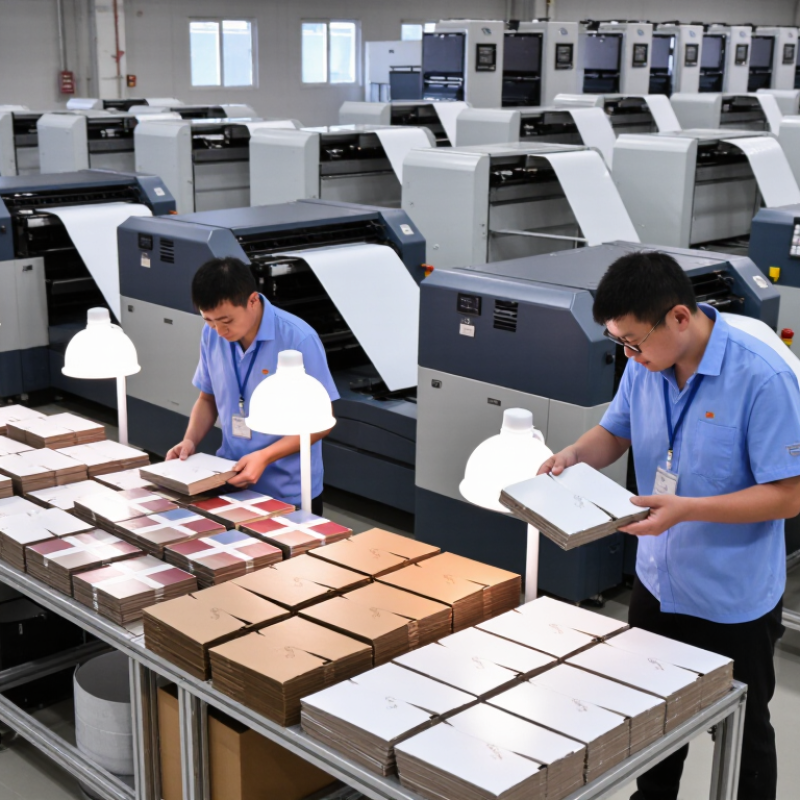
Choosing the right packaging printing supplier starts with a practical capability audit. Do not rely on a polished sample box. Ask to inspect the actual pressroom, prepress workflow, and quality records. According to Smithers’ The Future of Global Printing to 2028, packaging remains the largest application area in global print, with market value expected to exceed US$500 billion by 2028. That growth increases supplier pressure, but capacity alone proves little.
Match the technology to your packaging needs. Flexographic printing suits long runs and consistent repeat orders, while digital printing supports short runs, variable designs, and faster sampling. Gravure may deliver excellent image quality for high-volume production, but its cylinder costs require careful planning. Request evidence of color-management controls, substrate testing, ink adhesion, barcode verification, and inline inspection. The 2024 PMMI Packaging Compass highlights automation, traceability, and waste reduction as major packaging priorities. A supplier should explain these systems in measurable terms, not vague promises. I have seen impressive samples fail during humidity testing. That mistake is easy to repeat.
Tips: Request a live press demonstration and a documented test report. Compare color tolerances, setup waste, delivery performance, and complaint rates. Ask whether recycled or lightweight substrates need different drying settings. No supplier is perfect. Your evaluation should record weaknesses, not hide them. Also check whether the supplier can scale from a pilot order to full production without changing process controls. A small trial may reveal more than a long presentation.
Choosing the right packaging printing supplier requires more than comparing colorful samples. Start with quality standards that match your product and sales channel. Ask for documented inspection procedures, color tolerances, barcode verification, and batch records. A reliable supplier should explain how they control ink coverage, registration, drying, and finishing. Request a recent production sample, not only a polished prototype. In my experience, small registration errors become obvious when cartons are stacked under bright warehouse lights. Ask how defects are classified and what happens when a batch misses specification. Clear answers matter.
Material selection affects protection, appearance, cost, and recycling decisions. Compare paperboard grades, corrugated structures, films, and coatings by thickness, stiffness, moisture resistance, and print performance. Ask for technical data sheets and test results from representative conditions. A material that feels premium in a showroom may crease badly during transport. It may also absorb ink unevenly. Suppliers should explain fiber sources, adhesive choices, and whether the proposed structure suits your filling and storage environment. Be careful with vague environmental claims. They need evidence.
Customization should solve a handling or communication need, not add decoration without purpose. Review dielines, color references, closure strength, window placement, and variable-data capabilities. Insist on a preproduction proof and approve measurable details, including dimensions and finishing. I once overlooked a tight tuck flap; the artwork was excellent, but packing slowed noticeably. That mistake was avoidable. Leave room for revision. Compare response times, trial costs, and corrective-action records, because reliability is tested when something goes wrong.
Choosing a packaging printing supplier requires more than comparing the lowest quotation. Pricing should be separated into plates, inks, materials, finishing, packing, and freight. Ask whether the quote changes after artwork approval. A clear cost sheet prevents unpleasant surprises later.
Production capacity deserves practical testing. Request a recent sample, then ask how many units the facility can produce each week. Check the number of printing machines, finishing equipment, and trained operators. During a factory visit, look for organized material storage and documented quality checks. Small details matter. A supplier may promise high output, but seasonal demand can expose weak planning.
Delivery reliability depends on evidence, not confident promises. Review several recent order records, including planned and actual dispatch dates. Ask how the supplier handles machine breakdowns, rejected batches, or delayed raw materials. I have found that a written recovery plan is more useful than a perfect delivery statistic. Still, references can be incomplete. That deserves caution. Build a realistic schedule with approval time, production time, inspection, and transport included. Keep a small buffer for unexpected delays. A supplier that communicates problems early is often safer than one that hides them until the deadline.
Choosing the right packaging printing supplier requires more than comparing prices. Certifications offer a practical starting point. Ask for the certificate number, issuing body, expiry date, and approved production scope. ISO 9001 indicates a quality management system, while ISO 14001 addresses environmental management. Do not accept a logo alone. Verify the record independently. Smithers’ The Future of Packaging Print to 2027 valued the global market at about $431.6 billion in 2022. That scale demands disciplined quality control, not attractive promises.
Communication shows how a supplier will handle pressure. Request a written workflow for artwork checks, color approval, proofing, production updates, and complaint handling. During my supplier evaluations, small delays often revealed larger process gaps. A reliable partner confirms specifications before printing and reports defects openly. That honesty matters more than a perfect presentation. Long-term support should include repeat-order records, batch traceability, technical advice, and backup planning. The ISO Survey 2022 recorded more than 1.2 million ISO 9001 certificates worldwide, yet certification alone cannot prove strong daily service.
Tips: Send the same test brief to several suppliers. Compare their questions, not only their quotations. Request a physical proof and inspect color, coating, folding, and barcode readability. Ask for two customer references from similar packaging projects. Clarify response times, reprint policies, and who owns approved artwork. Review performance after the first order. A supplier may pass the audit and still communicate poorly. That possibility deserves attention.
© 2025 Copyright. All rights reserved.

Magento Catalog Menu Widget by EMThemes Magento Themes & Magento Templates