- About Us
- Privacy Policy
- Shipping and Returns
- Terms and Conditions
- Custom Quotation
- Sample Pack
- Contact Us
- Blogs
© 2025 Copyright. All rights reserved.

Choosing chocolate boxes packaging in 2026 means balancing protection, presentation, and practical costs. A box should keep chocolates secure during shipping, yet open smoothly at a shop counter or dinner table. Think of a molded insert holding glossy truffles in place, with enough clearance to prevent smudged coatings. Small details matter.
Dieter Rams, an influential product designer, offered a useful principle: “Good design is as little design as possible.” Though he was not a chocolate-packaging specialist, that idea can guide box choices: include features that serve a clear purpose, not decoration that adds clutter. Still, simplicity is not always the answer. Fragile fillings, varied shapes, and premium gifting may call for stronger inserts or layered compartments.
This guide explores box styles, materials, sizing, finishes, and customization options for the year ahead. It also considers how branding works beside everyday needs, such as stacking cartons, reading product details, and keeping each piece presentable. A beautiful box can disappoint if it arrives crushed. And a sturdy one can feel forgettable. The right choice depends on the chocolates, the customer, and the route from maker to recipient. Some trade-offs remain; cost and appearance rarely align perfectly. That deserves a second look.
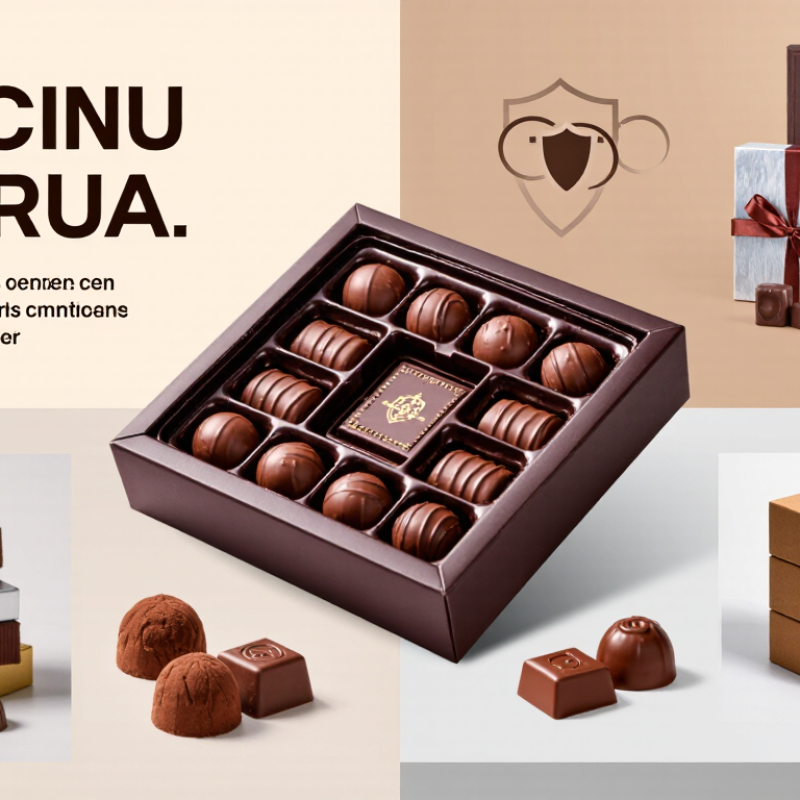
Choose the box around the chocolate, not the other way around. A solid bar needs a close-fitting carton that limits scuffing and light exposure. Pralines need a rigid insert to stop pieces knocking together. Filled chocolates may need stronger moisture and oxygen barriers, depending on their ingredients and tested shelf life. Heat matters too: a box left in a sunny delivery van can soften chocolate and encourage fat bloom. Packaging cannot fix poor storage, but it can reduce avoidable damage.
Tips: Match the inner tray to each piece. Check for odor transfer, loose cavities, and crushed corners. Test the packed product through realistic storage and shipping conditions.
Use protection tests, not assumptions. A premium-looking box is not always a safer one. The OECD’s Global Plastics Outlook (2022) reports that packaging accounted for 40% of global plastic waste in 2019. That figure supports avoiding needless material, but reducing layers blindly can increase breakage and spoilage. Compare paperboard, molded inserts, and barrier films against the product’s actual risks. Record shelf-life results for the packed chocolate, since a supplier’s general estimate may not fit your recipe or climate. Even a small test run can reveal problems that a polished mock-up misses.
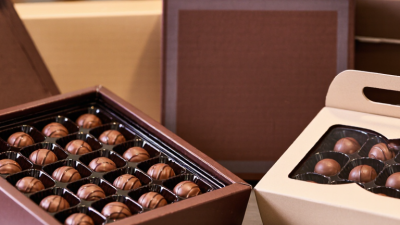
When choosing chocolate packaging boxes in 2026, start with the material. Eurostat reported that paper and cardboard made up 41% of EU packaging waste by weight in 2022. That figure describes waste, not how easily every box can be recycled. Still, it makes material choices worth examining closely.
For a small assortment, sturdy paperboard can hold its shape while keeping the box light. Check how the lid closes, whether corners crush during handling, and whether the insert stops chocolates from sliding. A snug fit matters. Oversized boxes use more material and let pieces knock together. But thinner board may buckle in humid storage or transit, so test a filled sample before ordering a large run.
Coatings and mixed materials need attention, too. A glossy finish or bonded window may affect local recycling options, depending on how the package is made and where it is collected. Ask suppliers for material specifications, and check guidance from local waste services rather than relying on a recycling symbol alone. Food-contact suitability also matters; keep chocolate away from inks or adhesives unless the packaging is designed for that use. I’ve seen attractive boxes disappoint when the insert shifts. It happens. A plain, well-fitted box can be the more dependable choice.
For chocolate packaging boxes in 2026, size the carton from the finished product, not the mould’s nominal dimensions. Measure the packed chocolates and insert together, then specify usable internal length, width, and depth. Build cavities around each piece, with enough clearance for easy loading but not enough for chocolates to collide. Small gaps matter. A fitted tray also helps keep delicate corners from striking the box walls during handling.
The U.S. EPA’s 2018 Advancing Sustainable Materials Management report recorded 82.2 million tons of containers and packaging in municipal solid waste. Eurostat reported 186.5 kilograms of packaging waste per EU resident in 2022. Neither figure measures chocolate-box void space directly, but both make unnecessary material worth examining. Test a sample by gently shaking it, then check for movement and scuffing after a realistic transit test. ISTA procedures can guide package testing. The first prototype may still rattle; that is useful evidence, not failure. Adjust cavity depth or add a divider before increasing the outer box size. A snug fit is not always better: overly tight cavities can deform soft fillings or slow packing, so test actual product batches.
Set box dimensions and inserts to limit empty space and help prevent chocolates from shifting or breaking.
How to read this: The comparison uses the same 12 chocolates, each measuring 30 × 30 × 20 mm, arranged in a 4 × 3 layout. Empty-volume percentages are calculated as box interior volume minus chocolate volume, divided by box interior volume. Inserts are not included in the calculation. A closer-fitting box with snug individual pockets can limit movement; confirm the final design with packaging and transit tests.
Choosing chocolate packaging in 2026 means checking the EU Packaging and Packaging Waste Regulation (PPWR), not just comparing finishes. The regulation generally applies from 12 August 2026. By 2030, packaging is expected to meet design-for-recycling requirements, with detailed criteria and exemptions set through follow-up rules. The European Commission’s PPWR guidance is essential reading before approving a long production run. Small details matter.
Eurostat reported that the EU generated 186.5 kg of packaging waste per person in 2022. That pressure makes material choices practical, not merely aesthetic. A paperboard carton with a simple coating may be easier to sort than a box combining paper, plastic windows, foil, and adhesive layers. Yet moisture protection and aroma barriers matter for chocolate quality. A recyclable-looking box is not automatically recyclable in every local collection system.
Tips: Ask suppliers for material specifications and recycling evidence, then check local sorting guidance. Test the finished box, including inks, closures, and inserts. A glossy coating may look premium but complicate recycling; the trade-off is easy to miss. Keep supplier records, and review PPWR updates before final artwork approval.
| Decision Area | Packaging Option or Requirement | Practical Considerations | What to Check Before Ordering |
|---|---|---|---|
| Choosing a Chocolate Box | |||
| Standard individual chocolates | Paperboard carton with individually wrapped pieces | Can provide a printable outer surface and space for dividers. Choose an inner wrap that protects against moisture, odours, and handling damage. | Ask suppliers to identify every material and layer. Check whether the carton and each wrapper can be sorted and recycled in the intended markets. |
| Gift assortments | Paperboard carton with a paperboard insert or tray | A fitted insert can help prevent movement. A tray designed around the product may avoid unnecessary void fill and excess packaging. | Check that the insert is easy to separate if it uses a different material. Size the box to the contents and assess protection during transport. |
| Windowed boxes | Paperboard carton with a transparent plastic window | The window may make the contents visible, but a bonded plastic window can complicate sorting or recycling where it cannot be readily separated. | Confirm the window material, attachment method, and disposal instructions. Test the complete package—not just the paperboard—in the relevant recycling system. |
| Foil-wrapped pieces | Paperboard carton with foil-wrapped chocolates | Foil can help protect individual pieces, but small or lightweight foil may not be captured effectively in every local collection and sorting system. | Check local acceptance for the foil and avoid assuming that a material is recyclable everywhere simply because it is technically recyclable. |
| Plastic trays or mixed-material wraps | Plastic tray, coated paper, or bonded multi-layer packaging | These formats may help hold products in place or provide a barrier. Mixed materials can be harder to separate and recycle than a well-designed single-material format. | Request the exact material specification and evidence about sorting and recycling in target countries. Consider whether the same protection can be achieved with simpler materials. |
| Product protection | Barrier, closure, and cushioning matched to the chocolate | Chocolate can be sensitive to heat, moisture, odours, and physical damage. A recyclable design still needs to protect product quality and prevent avoidable food waste. | Validate the package through storage and transport testing. Confirm food-contact suitability for all components that contact food, including inks, coatings, adhesives, and inner wraps. |
| Packaging minimisation | Right-sized packaging with no unnecessary components | Reducing empty space and redundant layers can lower material use while maintaining product protection. Do not remove protection without testing the consequences. | Document the design rationale and compare total packaging weight and material composition per packaged product. |
| EU PPWR Milestones | |||
| 12 August 2026 | General application date of the EU Packaging and Packaging Waste Regulation (PPWR), Regulation (EU) 2025/40 | The regulation applies from this date, but individual obligations can have their own dates, conditions, or later implementing measures. | Review the requirements relevant to the package, business role, and EU markets; do not treat the general application date as the start date for every PPWR obligation. |
| From 2030 | PPWR recyclability requirements are scheduled to apply to packaging placed on the EU market | The regulation sets recyclability criteria and performance grades. Detailed assessment and design requirements depend on the applicable EU rules and measures. | Design with recyclability in mind now, and check the latest EU rules and market-specific collection and sorting conditions before finalising packaging. |
| From 2035 | Recyclability at scale is scheduled to be required under the PPWR | Recyclability at scale concerns whether packaging is collected, sorted, and recycled in practice at the scale specified by the regulation—not only whether it can be recycled in theory. | Keep material and component data available and verify that the design aligns with the applicable EU criteria as they are established. |
| Official legal text | Regulation (EU) 2025/40 on packaging and packaging waste | Use the official regulation for the binding text, dates, definitions, and conditions. | Read the regulation on EUR-Lex. |
A chocolate box should hold each piece firmly without crushing delicate shells or letting inserts shift. Fit matters. Measure the filled box, then check for movement at the corners and headspace above the chocolates. A snug fit reduces impact travel, but an overly tight insert can scuff coatings or slow packing. There is a real trade-off here, and the prettiest insert is not always the safest one. Pitney Bowes’ 2023 Parcel Shipping Index reported 161 billion parcels worldwide in 2022, with volume projected to reach 256 billion by 2027. That scale makes parcel handling a practical packaging concern, not a rare edge case.
Build a filled sample using the actual box, insert, wrap, and shipping carton. Test the parcel to the current ISTA 3A procedure, which simulates common parcel-delivery hazards, including drops and vibration. Inspect the chocolate after testing: look for cracked corners, loose toppings, shifted pieces, and grease marks. Not a guarantee. ISTA 3A testing cannot fully represent every route or temperature condition, and chocolate may soften in warm transit even when the box passes. Record the test configuration and revise one component at a time; otherwise, it is hard to know what improved protection. A slightly smaller void may help, but only a repeat test can confirm it.
© 2025 Copyright. All rights reserved.

Magento Catalog Menu Widget by EMThemes Magento Themes & Magento Templates