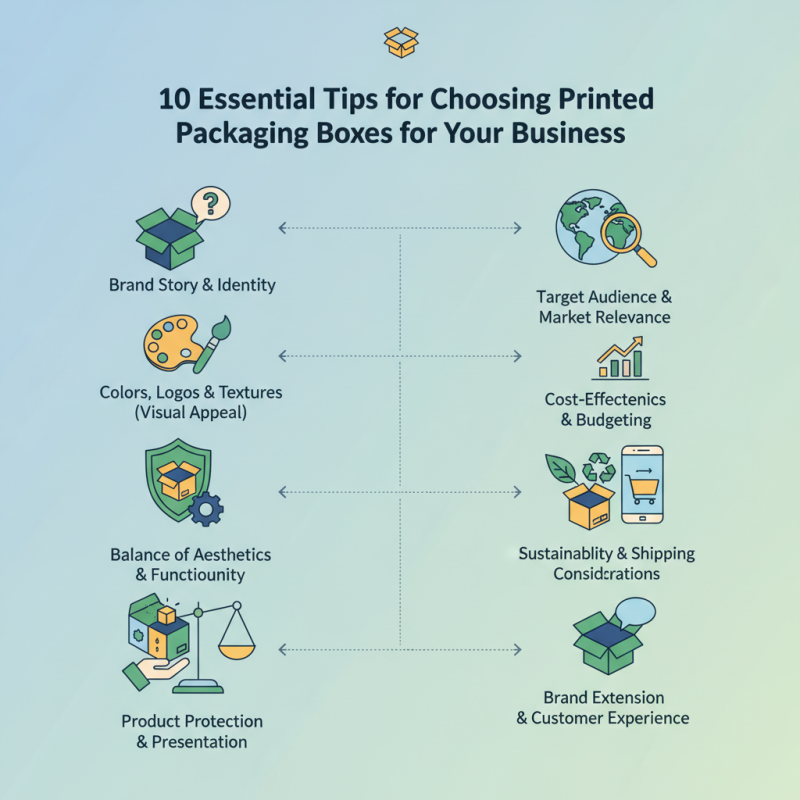
10 Essential Tips for Choosing Printed Packaging Boxes for Your Business?

In the competitive world of retail, choosing the right printed packaging boxes can significantly impact your brand. Renowned packaging expert, John Smith, once noted, "The right packaging can tell your brand's story before the customer even opens the box." This highlights the importance of selecting packaging that resonates with your audience.

When considering printed packaging boxes, think about the materials and design. The boxes should reflect your brand's identity and values. Colors, logos, and textures create an immediate impression. They link the customer with your product in a meaningful way. Ensure that your packaging is durable and visually appealing.

However, many businesses overlook functionality for aesthetics. A beautiful box that isn't sturdy is impractical. It’s crucial to balance design with practicality. Look for packaging that protects your products while showcasing them effectively. Remember, each box is more than just a container; it is an extension of your brand.
10 Essential Tips for Choosing Printed Packaging Boxes for Your Business?

Understanding Your Product's Requirements for Packaging

Choosing the right printed packaging boxes begins with understanding your product's specific requirements. What are the dimensions of your items? Do they require extra cushioning or support? Such details can dictate the box design. For example, fragile items may need thicker materials or additional padding. A well-fitted box can prevent damage during shipping, ensuring your product arrives safely.

Consider these tips when selecting packaging. Test various materials to find the one that best protects your product. Cardboard is sturdy, but lighter materials might reduce shipping costs. Color choices also matter. Bright colors attract attention but may not suit all products. Ensure that your design reflects your brand's identity.

Sometimes, businesses overlook size specifications. A box that's too large can increase costs and lead to wasted space. Conversely, a box that's too small can compromise your product's safety. Regularly reassessing your packaging choices can help improve efficiency. Experiment with designs and materials until you find the perfect fit for your needs.

Understanding Packaging Requirements for Your Business

Selecting the Right Materials for Durability and Aesthetics

Choosing the right materials for printed packaging boxes is crucial for your business. Durability and aesthetics play significant roles. According to industry reports, 70% of consumers decide whether to open a package based on its appearance. This shows how important the visual appeal of your packaging is. Materials such as corrugated cardboard, paperboard, and rigid boxes often determine the impression your brand leaves.

Durability cannot be overlooked. Reports indicate that 30% of products are damaged during transit due to weak packaging. A sturdy material like corrugated cardboard can withstand heavy weights and rough handling. While paperboard is lighter and often cheaper, it may not provide the same level of protection. Balancing cost and quality is a constant challenge. Investing in higher-quality materials might stretch your budget, but it safeguards customer satisfaction.

Recyclability is a growing concern. Many consumers prefer eco-friendly packaging. Around 56% of shoppers are willing to pay more for sustainable options. Using recyclable materials can boost your brand’s appeal and align with modern consumer values. However, the trade-off between aesthetics and eco-friendliness can be tricky. Finding that sweet spot requires careful consideration. Finding the right materials is sometimes about trial and error, reflecting on what works best for your brand's identity and your customers' expectations.

Designing Your Packaging for Branding and Customer Appeal

Designing effective packaging is crucial for your brand’s identity. The design should speak to your target audience. Create designs that are visually appealing and communicate your brand message clearly. Colors, fonts, and images should align with what your business represents.


Consider how the packaging feels and looks. A unique texture or an eye-catching graphic can draw attention. Remember, it’s not just about aesthetics. Packaging must also be functional. It should protect your product while being easy to open. Striking a balance between beauty and utility is key.


Sometimes, you might overlook certain aspects in your design process. For instance, the chosen materials may not convey the quality you aim for. Feedback from customers can help refine your design. Test different formats and gather opinions. Reflecting on what works and what doesn’t can lead you toward more effective solutions. Think about how your packaging can evolve with your brand.

Evaluating Cost-Effectiveness and Budget Constraints

10 Essential Tips for Choosing Printed Packaging Boxes for Your Business?

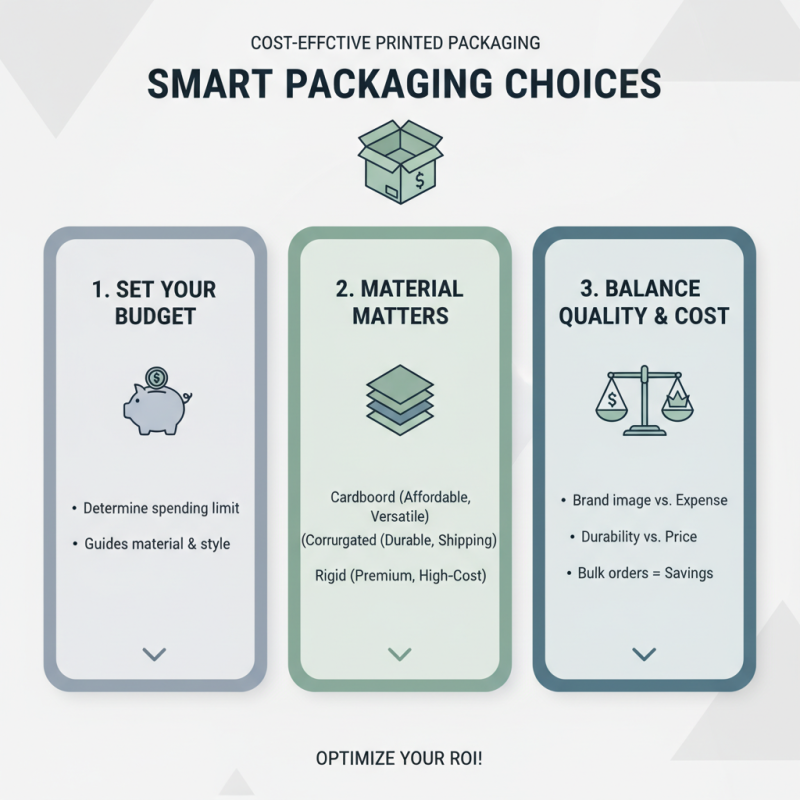
When evaluating printed packaging boxes, cost-effectiveness is crucial. Assessing your budget can help streamline your choices. Consider the material type. Premium materials may elevate your brand image but also increase costs. Find a balance between quality and expense.

Exploring bulk orders can yield discounts. Many suppliers offer reductions for larger quantities. However, ensure you won't overstock. This can strain finances if products don’t sell as expected.

Think about design elements. Intricate prints and custom shapes can enhance appeal but may also inflate costs. Evaluate if simpler designs could still catch the eye without breaking the bank. Always prioritize what truly resonates with your target audience. Sometimes, simplicity speaks louder than complexity. Make sure every dollar spent is justified.

Sourcing Reliable Suppliers and Manufacturers for Packaging Solutions

When sourcing reliable suppliers and manufacturers for printed packaging boxes, start with research. Explore online directories and trade shows. Check reviews and testimonials from previous clients. Look for companies that prioritize quality and customer service. Building a relationship with your supplier can lead to better deals and quicker responses.

Consider visiting suppliers' facilities if possible. This gives you insight into their production processes. Ask about their materials and sustainability practices. Packaging solutions should align with your brand values. If you find inconsistencies in a supplier's products or services, reflect on whether they truly fit your needs.

Evaluate multiple options before making a decision. Sometimes, lower prices can compromise quality. It's crucial to balance cost and quality. Keep your communication clear and direct. Strong communication ensures that your packaging aligns with your vision. Ultimately, a reliable partner can enhance your business's reputation and market presence.

10 Essential Tips for Choosing Printed Packaging Boxes for Your Business

Tip Description Key Consideration
1. Define Your Needs Identify the type, size, and quantity of boxes you require. Understand product dimensions and packaging requirements.
2. Explore Material Options Research different materials like cardboard, paperboard, and plastic. Assess durability and sustainability of materials.
3. Review Design Features Consider custom designs that align with your brand identity. Ensure designs allow effective product protection.
4. Assess Printing Options Look into different printing methods for your design preferences. Check quality and color accuracy of prints.
5. Consider Cost Factors Get quotes from various suppliers to compare pricing. Factor in shipping and bulk order discounts.
6. Check Supplier Credibility Research potential suppliers’ reputations and reviews. Look for certifications and industry recognitions.
7. Evaluate Minimum Order Quantities Understand the minimum quantity required for orders. Plan your inventory and budget accordingly.
8. Inquire About Lead Times Ask suppliers about production and delivery timelines. Plan orders based on your product launch schedule.
9. Request Samples Always request samples to check quality before placing a bulk order. Analysize sturdiness and design before finalizing.
10. Make an Informed Decision Evaluate all factors and choose a supplier that meets your needs. Consider long-term relationships with reliable suppliers.

Magento Catalog Menu Widget by EMThemes Magento Themes & Magento Templates