How to Choose Pastry Packaging Boxes for Global Buyers?

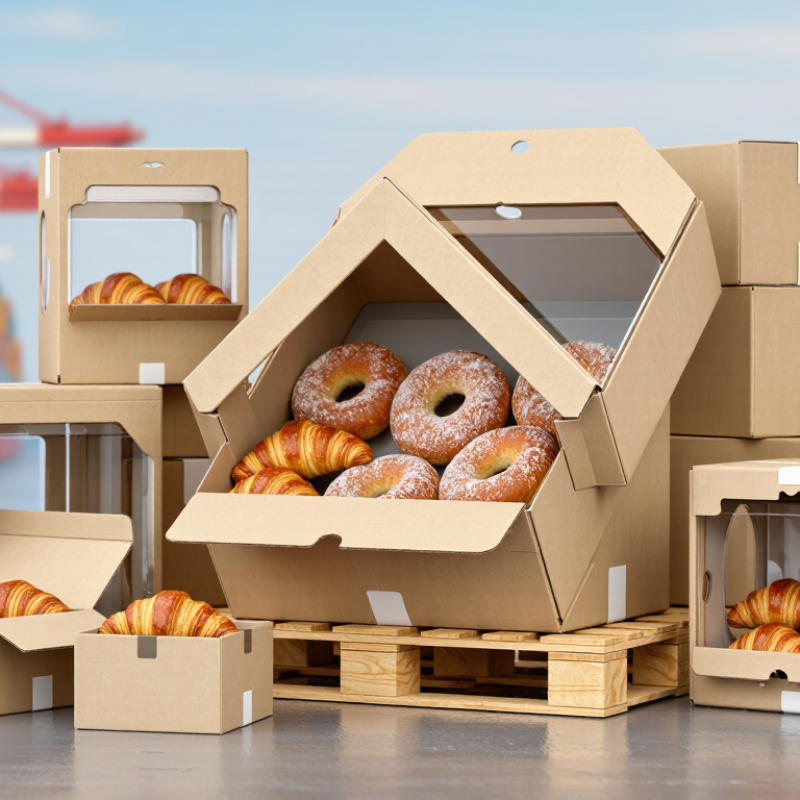
Choosing pastry packaging boxes for global buyers is not simply a design decision. It is a protection, logistics, and trust decision. A delicate croissant may leave a bakery warm, travel through humid ports, and arrive beside heavier cartons. The box must survive that journey without crushing the layers, trapping steam, or losing its visual appeal.

Packaging educator Walter Soroka described packaging as “the science, art, and technology of enclosing and protecting products for distribution, storage, sale, and use.” That principle remains highly practical for pastry packaging boxes. Buyers should examine board strength, food-contact suitability, moisture resistance, ventilation, closure security, and print consistency. A beautiful box is not enough. It must also fit pallets, tolerate handling, and protect pastries during realistic transport tests.

Global purchasing adds more questions. Can the supplier provide material specifications and batch records? Are inks, coatings, adhesives, and recycled fibers suitable for the intended food application? Does the box size match the pastry, or does excess space invite movement? Small gaps can create large damage. Yet buyers sometimes overpack products and increase cost unnecessarily. That mistake deserves honest review.

Reliable sourcing requires samples, compression checks, temperature considerations, and clear quality agreements. Suppliers should explain their production limits instead of promising everything. Buyers should also test the packaging with real pastries, not empty boxes. The final choice should balance protection, presentation, sustainability, and landed cost. It may not be perfect. However, careful evidence is more valuable than attractive assumptions.
How to Choose Pastry Packaging Boxes for Global Buyers?

Understanding Pastry Packaging Requirements for Global Markets

How to Choose Pastry Packaging Boxes for Global Buyers?

Understanding Pastry Packaging Requirements for Global Markets

Global pastry packaging starts with the product, not the box. A crisp tart needs moisture protection, while a cream-filled pastry needs stronger temperature control. In trial shipments, attractive boxes have failed during humid sea transport. The pastry arrived soft. Product details matter. Record shelf life, filling type, fat content, and expected transit time before selecting materials. Food-contact paperboard, suitable inks, and safe adhesives should be verified through supplier documentation. Requirements differ across countries, so importers should confirm current rules with local authorities or qualified compliance specialists.

Box structure must protect delicate toppings without wasting shipping space. A rigid insert can stop pastries from sliding during sudden handling. Ventilation may preserve crispness, but excessive openings invite dust and moisture. Test both. Measure compression strength, stacking height, and closure performance using realistic cartons. Cold-chain shipments need packaging that tolerates condensation. Recycled fibers may perform differently after moisture exposure, so request test data instead of judging appearance. Many purchasing decisions become too optimistic here.

Global buyers also examine labeling, traceability, and recycling instructions. Printed information should remain readable after refrigeration and handling. Use clear batch fields and production dates. Avoid vague sustainability claims. Evidence matters. Request material specifications, migration test reports, and pre-shipment samples. A small pilot shipment can reveal crushed corners, odor transfer, or loose locks before large orders begin. No design is perfect. Review packaging after every route, season, and pastry change.


How to Choose Pastry Packaging Boxes for Global Buyers?

Paperboard basis weight is a practical starting point for selecting pastry boxes. Lightweight boxes suit single portions, while heavier grades provide better rigidity for cakes, multi-piece assortments, stacking, and international transport. Moisture resistance, food-contact compliance, recycling requirements, and local labeling rules should also be checked for the destination market.

Choosing the Right Materials for Pastry Packaging Boxes

For global buyers, pastry packaging boxes should begin with material performance, not appearance. A crisp tart needs moisture resistance, while butter-rich pastries require grease protection. Recycled paperboard can provide strong printability and rigidity, but it may soften in humid delivery conditions. Corrugated board adds cushioning for stacked cartons and long-distance transport. Test both materials with chilled and room-temperature pastries.

Food safety also depends on coatings, inks, adhesives, and recycled content. Suppliers should provide food-contact declarations, migration test results, and clear material specifications. The Food and Agriculture Organization reports that 13.2% of food is lost between harvest and retail. Protective packaging cannot solve every loss, but weak boxes can increase damage during handling. Small compression tests often reveal more than attractive samples.

Sustainability needs careful judgment. The 2024 UNEP Food Waste Index estimates that 1.05 billion tonnes of food were wasted in 2022. A lighter box is not automatically better if crushed pastries become waste. Choose recyclable fiber structures where local recycling systems can process them, and avoid unnecessary mixed materials. I have found that real shipment trials expose flaws quickly. A box may pass a laboratory test, yet fail after rain, stacking, or repeated opening. That imperfection deserves attention.

Evaluating Box Size, Design, and Product Protection

For global pastry buyers, packaging begins with the product, not the artwork. I have found that a loose box lets macarons slide and cookies break at the corners. A tight fit can crush icing. Measure each pastry after chilling, including toppings and liners. Leave slight clearance for easy removal. Do not guess. A trial with real products reveals problems that drawings miss.

Box design should support handling, display, and storage. A clear window helps customers inspect decoration, but it may weaken the lid. A tuck closure saves assembly time, while a rigid structure feels more secure during delivery.

Ventilation matters for warm pastries, yet open vents can reduce moisture control. I once preferred a beautiful deep box, but it wasted shelf space and increased material use. That decision needed more reflection. Use food-contact suitable materials, and confirm printed surfaces cannot touch the pastry.

Protection depends on the journey. Test filled boxes through stacking, vibration, and brief drops that imitate warehouse handling. Check whether corners stay square and grease marks spread. Paper inserts, cushions, or separate compartments can prevent movement. They should not make unpacking difficult. Moisture-resistant coatings may help, but they cannot replace freshness testing. Ask suppliers for samples from the intended production batch. Small board-thickness differences matter. Record dimensions, weight, closure performance, and damage rates before ordering in volume.

Checking Food Safety, Sustainability, and Compliance Standards

Choosing pastry packaging boxes for global buyers requires more than attractive printing. Food safety comes first. The board should be suitable for direct food contact and supported by clear compliance documents. Ask for test reports covering migration, odor, heavy metals, and ink safety. A supplier should also explain the coating used inside the box. Grease resistance is useful, but unexplained chemicals create unnecessary risk.

Sustainability claims need careful checking. Recycled paper may reduce virgin material use, yet it still needs food-contact approval. Paper sourced from responsibly managed forests can support purchasing goals, but certification details must be current and traceable. “Compostable” is not a universal guarantee. Local facilities may not accept the same materials. Check the full structure, including windows, adhesives, coatings, and labels. Small parts matter.

Compliance changes across markets. Packaging may need different language, recycling marks, dimensions, or documentation. Request a material specification, certificate of analysis, batch records, and recent production samples. Then test the box with real pastries. Place a butter-rich tart inside for several hours. Check oil marks, soft corners, odor, and print transfer. Test stacking in humid conditions, too. A box that looks perfect in a showroom may weaken during ocean transport. I have seen sustainability goals conflict with moisture protection, so the design may require compromise. Review that compromise openly rather than hiding it behind attractive claims. Reliable suppliers welcome questions and update documents when materials change.

How to Choose Pastry Packaging Boxes for Global Buyers? - Checking Food Safety, Sustainability, and Compliance Standards

Buyer Requirement What to Check Relevant Standard or Regulatory Reference Practical Acceptance Criteria Recommended Buyer Evidence
Direct food contact Identify every layer that may touch the pastry, including paperboard, coating, window film, ink, adhesive, and grease-resistant treatment. Food-contact rules in the destination market; for the United States, applicable FDA food-contact regulations such as 21 CFR Parts 175–178 may apply. All food-contact components are specified, traceable, and supported by food-contact compliance documentation. Material specifications, supplier declarations, composition details, and a component-level compliance statement.
European Union market access Check general food-contact safety, traceability, and good manufacturing practice requirements. Regulation (EC) No 1935/2004 and Commission Regulation (EC) No 2023/2006. Paper and board may also be subject to national requirements where no fully harmonised EU-specific measure applies. The packaging must not transfer substances to food at levels that endanger health or cause unacceptable changes in food composition, taste, or smell. Declaration of Compliance where applicable, supporting test reports, GMP records, and batch traceability information.
United States market access Review the regulatory status of paperboard, coatings, adhesives, inks, and functional barriers for the intended food type and use conditions. Applicable FDA food-contact regulations, including relevant sections of 21 CFR Parts 175–178, or another valid regulatory basis. The packaging is suitable for the stated food category, temperature range, contact time, and direct or indirect contact condition. Supplier compliance letter, intended-use statement, formulation information where available, and migration or extraction test results.
China market access Confirm that paperboard, coatings, inks, adhesives, and molded or plastic windows meet the applicable Chinese food-contact requirements. Applicable GB 4806 food-contact standards, including GB 4806.8 for food-contact paper, paperboard, and paper articles, together with other applicable material standards. The final packaging structure and intended use are covered by current applicable requirements, with testing performed using representative samples. Chinese-market compliance statement, accredited laboratory reports where required, material composition, and production-batch records.
Grease and moisture resistance Evaluate oil resistance, water resistance, condensation performance, and coating or barrier integrity for butter-rich pastries and chilled products. Use destination-market food-contact requirements and validated test methods suitable for the intended food and storage conditions. No visible leakage, staining, delamination, softening, or loss of box strength during the defined test period. Test protocol specifying food simulant or product type, temperature, duration, sample size, and pass/fail limits.
Ink, varnish, and adhesive safety Check whether printed or coated surfaces can contact food directly or transfer substances through the paperboard. Applicable food-contact legislation, GMP controls, and recognized industry guidance for printing inks and adhesives. Use low-migration formulations where appropriate; prevent set-off and avoid printing on the direct food-contact surface unless specifically supported. Ink and adhesive declarations, curing-process controls, set-off assessment, and finished-packaging migration or sensory test results.
Recyclability Assess whether the box can be accepted by the target country’s paper recycling system after use. Local collection and recycling rules; ISO 18604 provides principles for packaging recyclability as part of material recycling. Prefer fiber-based structures with limited non-paper components; ensure windows, coatings, labels, and adhesives do not prevent sorting or repulping in the target system. Recyclability assessment, material breakdown, local collection guidance, and documentation for removable or compatible components.
Compostability claims Verify the complete packaging system, not only the paperboard, including inks, coatings, adhesives, windows, and labels. EN 13432 is a commonly referenced standard for packaging recoverable through industrial composting and biodegradation; local claims rules also apply. Use “industrially compostable” only when the complete relevant structure has been tested and the destination has suitable industrial composting facilities. Full-system certification or test report, claim wording, disposal instructions, and evidence that the target market accepts the claim.
Responsible fiber sourcing Request the fiber source, recycled-content percentage, and chain-of-custody information where responsible forestry claims are made. Recognized third-party forestry or recycled-content certification schemes may support sourcing claims; certification scope must cover the supplied product. Claims are specific, verifiable, and consistent with the actual paperboard grade and production site. Valid certificate number, scope statement, percentage claim, and supplier chain-of-custody documentation where applicable.
Chemical restrictions Screen inks, coatings, adhesives, pigments, and recycled fibers for substances restricted by the destination market or retailer specification. Destination-market chemical laws, including applicable restrictions under EU REACH and retailer-specific restricted-substance lists. No intentionally added restricted substances where prohibited; declarations should reflect the current formulation and supplier controls. Restricted-substance declaration, supplier questionnaire, test reports for specified substances, and change-notification procedure.
Structural performance Check compression strength, stacking stability, folding accuracy, closure security, and resistance to transport vibration. Use packaging performance test methods appropriate to the distribution route; ISO 12048 covers compression and stacking testing for complete filled transport packages. The filled box protects the pastry without collapse, accidental opening, excessive deformation, or contact damage under defined shipping conditions. Filled-package test report, stacking duration, load level, humidity condition, transit simulation, and approved sample record.
Traceability and quality control Confirm that raw materials, production batches, testing, complaints, and corrective actions can be traced. Food-contact GMP and general quality-management expectations in the destination market and buyer specification. Each delivery can be linked to a production date, material lot, approved artwork, inspection record, and release decision. Batch coding, inspection plan, certificate of analysis where relevant, retention samples, and documented recall or complaint procedure.
Labeling and environmental claims Review recycling instructions, material identification, disposal wording, and claims such as “recyclable,” “compostable,” or “plastic-free.” Follow destination-country labeling and consumer-protection rules; environmental claims should be clear, substantiated, and not misleading. Use precise claim language that matches the actual packaging structure and available disposal infrastructure. Claim substantiation file, artwork approval, disposal instructions, and market-specific legal review.

Note: Regulatory obligations depend on the complete packaging structure, intended food, temperature, contact time, and destination market. Buyers should verify current local requirements before commercial production.

Comparing Suppliers, Costs, and International Shipping Options

Choosing pastry packaging boxes for global buyers requires more than comparing unit prices. Request samples from at least three suppliers. Check board thickness, grease resistance, folding accuracy, and print consistency. A box that looks strong may collapse after humidity exposure.

Supplier quotes should show tooling, printing plates, inner liners, minimum order quantities, and replacement policies. Compare landed cost, not factory price. The calculation should include cartons, insurance, customs handling, and storage. The World Bank’s Logistics Performance Index 2023 shows major differences in customs and delivery performance between trading markets. Port reliability can change your real cost quickly.

Tips: Ask suppliers for a drop-test video and a food-contact declaration. Order a small pilot shipment before committing. Measure the pastry after cooling, because warm fillings can create condensation. Sea freight usually suits large, predictable orders, while air freight protects urgent launches but increases cost sharply. UNCTAD’s Review of Maritime Transport 2023 reports that ships carry over 80% of global merchandise trade by volume, making ocean shipping practical for bulk packaging. Still, delays happen. Smithers’ sustainable packaging research projects this market will approach $394 billion by 2028, so recycled or fiber-based boxes may improve buyer acceptance. However, sustainability claims need evidence. I would not trust vague “eco” wording without material data, recycling guidance, and supplier test records. Industry assumptions are often too optimistic.

Magento Catalog Menu Widget by EMThemes Magento Themes & Magento Templates